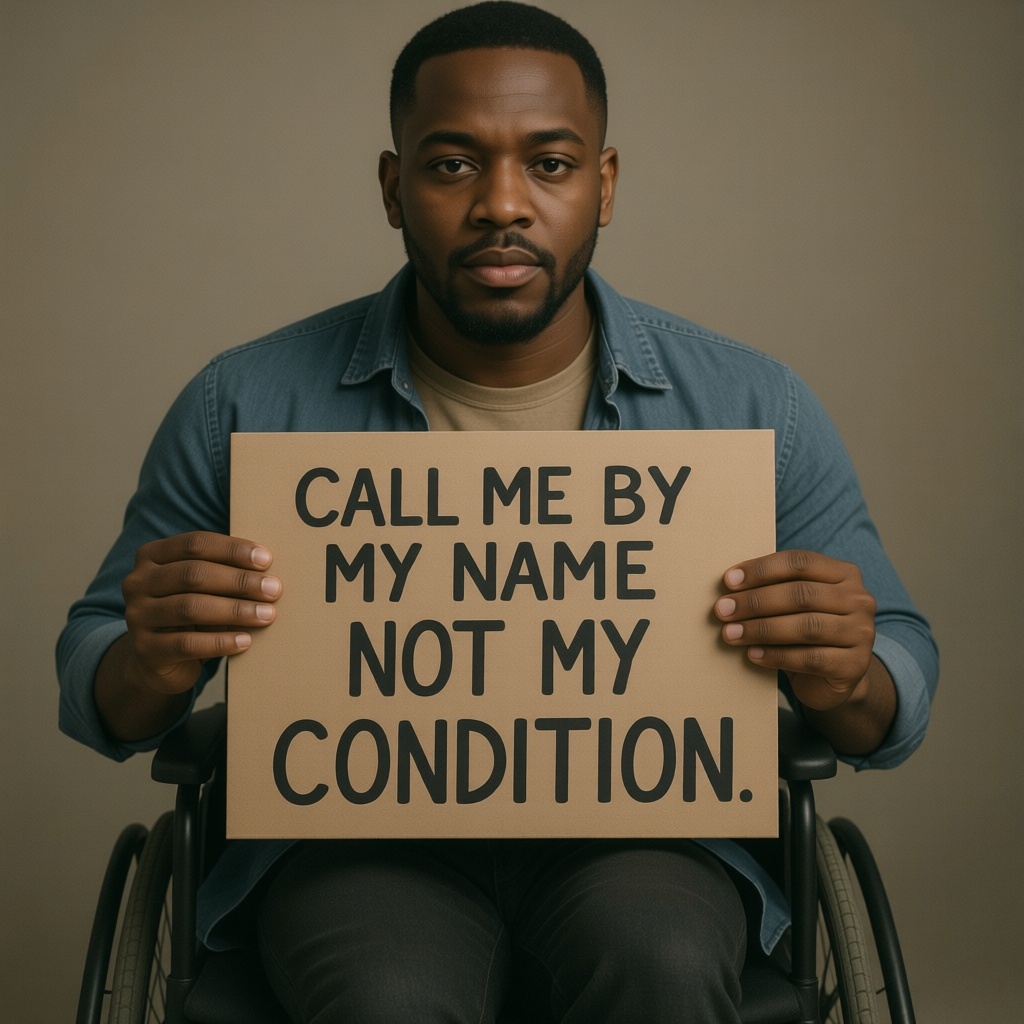
Words don’t land softly. Not here.
In Zimbabwe—and in many African communities—what you call disability is never just a description. It comes wrapped in history and belief: the legacy of colonial schooling and mission hospitals, family and customary expectations, church teachings, economic stress, and the everyday “people talk” of places where everyone knows your surname, your totem, and your grandmother’s story.
So when we talk about labels, we’re not only talking about medical terms on a form. We’re talking about the name someone gets called at home, in the clinic queue, at a school assembly, in a prayer line, or on that dusty footpath where gossip travels faster than news.
In that kind of world, a label can be a lifeline—or a life sentence.
1) When culture turns disability into a story about cause
In many Zimbabwean (and wider African) settings, disability is often understood through a “why” lens: why did this happen? Before people ask what support is needed, they look for meaning.
And that meaning can take many shapes:
- spiritual explanations (a test, punishment, evil spirits)
- social explanations (something the family did, a taboo broken)
- moral explanations (shame, blame, “that home has issues”)
- biomedical explanations (injury, illness, genetics)
The problem is this: those explanations don’t stay as private opinions. They become everyday language. A person can end up wearing a label that carries suspicion, fear, or pity—even if the word sounds “neutral.”
And because communities are often collectivist, the label rarely sticks to one person. It spreads. The whole household can be spoken about differently. Marriage prospects shift. Invitations disappear. Caregivers get judged. The family name starts carrying weight.
2) Formal labels in Zimbabwe: access on one side, exposure on the other
Zimbabwe does have laws and policies that recognize disability rights, and disability activists and DPOs have fought hard for decades. But in real life, support often depends on whether you have the “right” label—usually confirmed through a clinic, hospital, or school system.
A formal diagnosis or classification can open doors to things like:
- special needs support (where it exists)
- disability assistance programs (often limited or inconsistent)
- NGO/donor devices (wheelchairs, hearing aids, etc.)
- documentation for accommodations (when institutions cooperate)
But that same label can also come with sharp edges:
- privacy is fragile in tight-knit communities—once people know, they know
- gatekeeping happens, especially with invisible disabilities (epilepsy, mental health conditions, chronic illness)
- segregation can be disguised as support—a label becomes the reason a child is pushed “elsewhere”
- people are forced to prove themselves, over and over, to be taken seriously
So yes, labels can unlock resources. They can also increase vulnerability.
3) When “describing” becomes dismissing
Sometimes the language around disability isn’t cruel on purpose. It can be habit. It can be what people inherited. It can be discomfort—people not knowing what to say, so they reach for the old phrases.
But intention doesn’t erase impact.
In Zimbabwe, as in many places, labels can shape how a person is treated in small, daily ways:
- people talk to the caregiver instead of the disabled person
- inability is assumed instead of asking what support works
- physical disability is automatically linked to cognitive disability
- adults are infantilized (“ah, they’re like children”)
You see it in clinics, schools, kombis, churches, workplaces—sometimes even in “helpful” interactions that look kind on the surface but quietly remove dignity underneath.
4) School: where a label can decide a future too early
Most schools are under strain. Teachers are overloaded, classes are big, resources are thin. In that environment, labels become shortcuts.
A child gets called “slow,” “mentally disabled,” “difficult,” “problematic”—and whether or not it’s formal, it can follow them like a shadow. One teacher says it, the next teacher inherits it. Soon the child is treated like a conclusion instead of a learner.
When disability is framed as deficit rather than difference + access need, it often leads to:
- low expectations and limited learning opportunities
- exclusion from leadership roles (prefects, clubs, sports)
- bullying and isolation
- early dropout—especially for girls with disabilities
And because school is tied to employment and independence, that label doesn’t stay in childhood. It echoes.
5) Work and the economy: labels meet survival
Zimbabwe’s economy has pushed many people into informal work, hustling, cross-border trade, piece jobs—making a plan. In both formal and informal spaces, disability labels often decide who is seen as employable, trainable, or “worth the trouble.”
Employers may avoid hiring disabled people because they assume:
- productivity will be low
- accommodation will be expensive
- the person will be “a risk”
Even when accommodations might be simple: flexible tasks, clear communication, small changes to space and access.
In informal markets, the story shifts—but labels still run the show:
- some people are pushed toward begging because the public expects disability to look like dependence
- others are praised as “inspirational” when they succeed—a compliment that still quietly says you don’t belong in the normal category
The label becomes an economic filter: worker, burden, or charity case.
6) Churches and faith spaces: comfort, stigma, and the “deliverance” narrative
Church is central to life for many Zimbabwean families. It can be a place of real support—food, visits, encouragement, community.
But it can also be complicated when disability is framed mainly as something to “heal” or “cast out.”
For some, prayer is empowering. For others, the constant framing as a “deliverance project” becomes its own label: always broken, always waiting to be fixed. And when healing doesn’t happen, people start searching for reasons—lack of faith, hidden sin, spiritual contamination.
That kind of labeling affects whether disabled people are welcomed, trusted, allowed to lead, or simply tolerated.
7) Gender makes the label heavier for women and girls
Women and girls with disabilities often carry a double burden: disability stigma plus gender expectations.
They may be labeled as:
- unsuitable for marriage
- asexual (left out of sexual health education) or hypersexualized (and blamed)
- unfit to be mothers, or seen as unreliable caregivers
These labels don’t just hurt feelings—they can increase vulnerability to abuse and reduce access to justice, especially when credibility is questioned: she can’t testify; she didn’t understand; she’s confused.
At that point, labeling becomes a gatekeeper to safety.
8) When naming becomes power: identity and disability movements
There’s another side to this, and it matters.
Across Africa, disability movements and DPOs have helped people reclaim labels on their own terms. In that space, “disabled” can become a political identity—not a shame label, but a way of naming exclusion and demanding access.
The question shifts from:
- “What’s wrong with you?”
to - “What barriers are in your way?”
Used that way, naming becomes a tool for:
- accessible transport and buildings
- inclusive education
- representation in decision-making
- shifting public attitudes from pity to rights
The same act—labeling—can harm or empower depending on who controls the story.
9) What better labeling could look like (Zimbabwe and the region)
Maybe labels are unavoidable. But reduction is not.
A healthier approach could look like:
- Consent and preference: ask people how they want to be described, in their own language and worldview
- Support-first framing: move from “What are you?” to “What helps you participate fully?”
- Community education: work with schools, churches, and traditional leaders to challenge myths without insulting people’s belief systems
- Privacy protections: treat disability information as sensitive, not gossip material
- Representation: nothing changes language faster than seeing disabled people as teachers, nurses, pastors, entrepreneurs, artists, and leaders
Closing: labels reveal our social imagination
In Zimbabwean and African societies, a disability label can act like a drumbeat—it sets the rhythm of how someone is treated: sheltered, excluded, pitied, feared, respected, ignored.
But labels also expose us. They reveal what we believe about worth, productivity, purity, and belonging.
When we choose language that leaves room for dignity and complexity, we don’t only rename disability. We reshape the world around it.
In that setting, a label can be a lifeline or a lifelong sentence.